.png)
Property is Power! The New American Dream Comes with a Wealth Requirement
Property is Power!
The New American Dream Comes with a Wealth Requirement
For years, Americans were told that if they worked hard, earned a degree, secured stable employment, and managed their finances responsibly, homeownership would eventually follow. Property, after all, was presented not simply as a financial milestone, but as the central mechanism through which middle-class stability and generational wealth were built. Yet for a growing number of first-time buyers, particularly first-generation professionals, that promise feels increasingly detached from reality. The modern housing market isoften described as “challenging,” but that word understates the deeper structural shift underway.
Home prices remain historically elevated despite modest stabilization insome regions. Mortgage rates continue hovering near 6 to 7 percent,dramatically increasing monthly payments even when prices soften slightly. Atthe same time, first-time homebuyers now make up only a small share of overall purchases, reaching some of the lowest levels recorded in decades. The issue isnot simply affordability in the traditional sense. The issue is that access to ownership increasingly depends on whether one already possesses money before entering the market.
That distinction matters more than most economic conversations acknowledge. A generation ago, a strong income and disciplined savings habits could often compensate for the absence of inherited wealth. Today, that equation has changed. In many metropolitan areas, buyers are competing not just against other working professionals, but against investors, equity-rich homeowners, and cash buyers capable of moving through the market with speed and leverage increasingly, liquidity determines who gets access to ownership.
This creates a profound dilemma for first-generation buyers. Many are highly educated. Many have respectable incomes. Many have done precisely what society instructed them to do. Yet they remain trapped in a financial paradox earning too much to qualify for meaningful assistance but lacking the accumulated family wealth necessary to compete comfortably in the market. The result is a quiet restructuring of who homeownership is really for.
The prevailing national conversation often treats this affordability crisisas a temporary cyclical imbalance tied to inflation, interest rates, or housing supply. But beneath those surface-level explanations lies a deeper issue America’s housing market increasingly advantages those who are already positioned inside the asset economy while making entry substantially harder for those attempting to build wealth for the first time. This is not accidental markets tend to reproduce existing advantages unless deliberate intervention alters their trajectory, and housing, perhaps more than any other sector, reflects the accumulated effects of historical inequality. For Black Americans, this reality carries particular weight.
The Black middle class today is more educated and professionallyaccomplished than at any previous point in American history. Yet educationaladvancement has not translated proportionally into wealth accumulation. Onereason is that wealth in America is still overwhelmingly tied to propertyownership and asset appreciation, not simply income.
But many Black households enter the housing market without the advantages that quietly support many other buyers. Lower median family wealth means down payments are harder to assemble. Parents are often less able to contribute financial assistance. Student debt burdens are typically higher, even among Black college graduates. Rising rents consume larger portions of monthly income, slowing the ability to save aggressively. Meanwhile, homes at theentry-level price point the very segment where many first-time Black buyers compete face intense pressure from investors and cash-heavy buyers.
In practice, this means Black buyers are often forced to work from anentirely different starting point within the same market. The challenge is not simply qualifying for a mortgage. Many Black professionals qualify. The challenge is competing in a system increasingly designed around existing capital rather than future earning potential.
This distinction exposes a larger truth about inequality in modern America. Economic exclusion no longer always appears through overt denial. More often, it emerges through structural conditions that appear neutral while producing highly unequal outcomes. A market does not have to explicitly rejectfirst-generation buyers to systematically disadvantage them. It merely has to reward preexisting wealth aggressively enough.
The consequences extend far beyond housing itself. Delayed homeownerhip delays equity accumulation. Delayed equity accumulation delays businessformation, retirement security, educational investment for children, and intergenerational transfers of wealth. Every year spent outside ownership inappreciating markets widens the long-term gap between those building equity andthose that aren’t.
This is why property remains such a critical issue within the Black community specifically property is not simply about status or consumption. It is about positioning ownership determines who participates in appreciation and who merely absorbs rising costs. It determines who can borrow against assets, who can weather economic shocks, and who can transfer opportunity forward instead of restarting from zero.
And yet despite these realities, there remains an urgent need for a more sophisticated conversation within both public policy circles and Black communities themselves. Too often, discussions around housing become overly simplified into personal responsibility narratives or partisan talking points. But the truth is more complex. The modern affordability crisis is not solely the result of poor planning or individual financial behavior. It is deeply connected to decades of uneven wealth accumulation, restricted access to ownership, zoning policies, institutional investment patterns, wage stagnation relative to asset growth, and educational debt burdens that disproportionately affect first-generation professionals.
Understanding this complexity matters because solutions require more thanmotivation. They require strategy. Politically, there must be stronger effortsto increase affordable inventory, regulate predatory investor concentration inresidential markets, and expand access to down payment assistance andfirst-generation homebuyer programs. Financial institutions must continueevolving underwriting models that recognize rent history, non-traditionalincome streams, and broader indicators of financial responsibility.Universities and professional organizations should also treat financialliteracy and asset acquisition with the same seriousness as career advancement,particularly for first-generation graduates navigating systems their familiesmay not have historically accessed.
But culturally, there is another challenge Black America must confront honestly ownership can no longer remain a secondary conversation behind income alone. Too often, professional success is measured by salary without equal emphasis on asset positioning yet in America, wealth gaps are rarely income gaps alone they are ownership gaps, and ownership gaps compound over generations. The danger of this moment is not simply that homes are expensive, homes have always carried cost. The deeper danger is that the pathway into ownership is becoming increasingly conditional, less dependent on discipline and more dependent on whether one begins with existing financial leverage. That is a profound shift in American’s contract because when markets primarily reward those who already own assets, mobility slows, and when mobility slows for first-generation buyers, particularly Black buyers, inequality hardens into permanence.
Which raises a question larger than housing itself what what happens to a society when the gateway to wealth creation becomes increasingly in accessible to those attempting to enter it for the first time? The answer may define not only the future of the housing market, but the future of economic mobility in America.
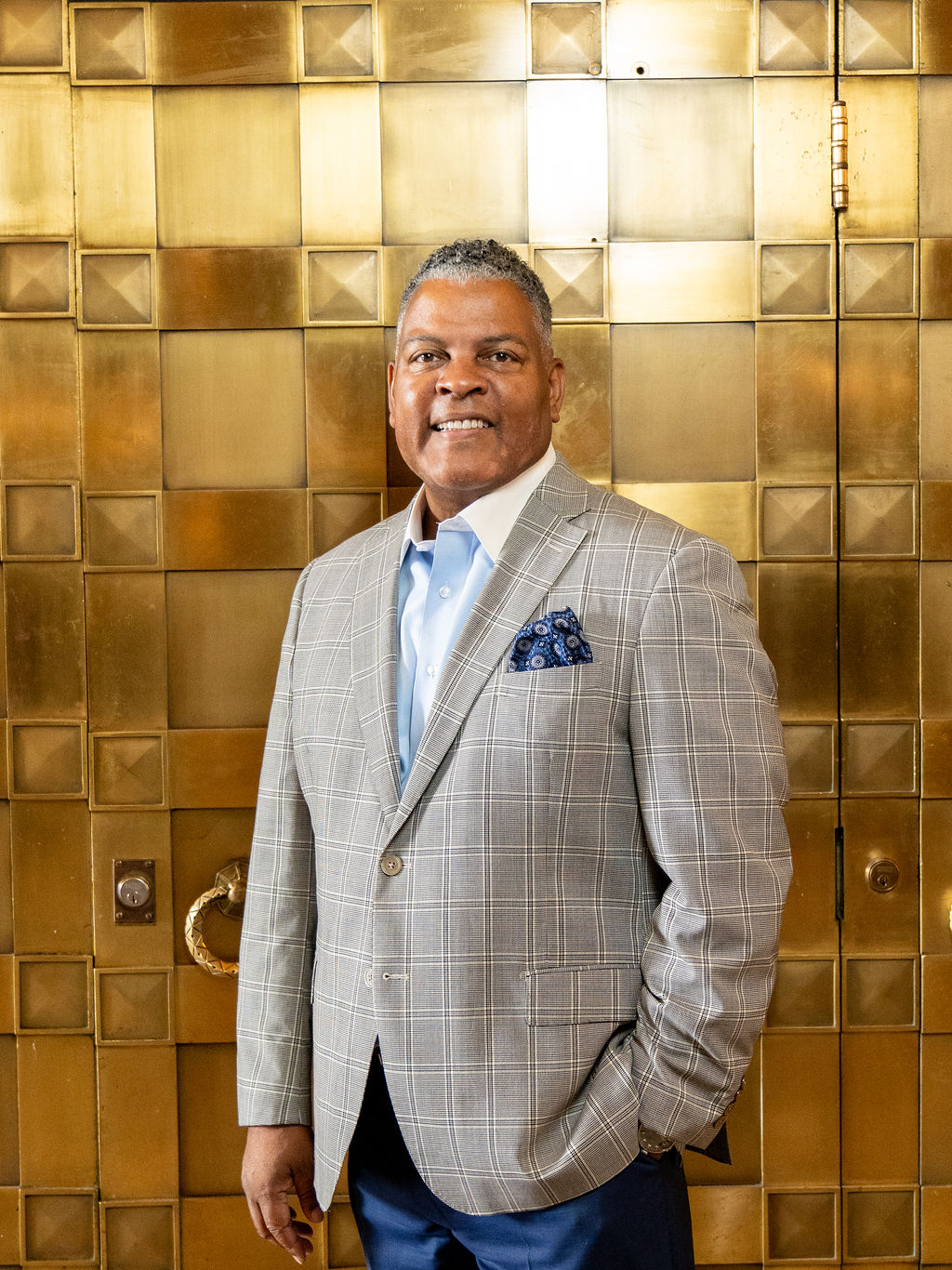
Dr. Anthony O. Kellum – CEO ofKellum Mortgage, LLC Homeownership Advocate, Speaker, Author NMLS # 1267030 NMLS #1567030 O: 313-263-6388 W: www.KelluMortgage.com.
Property is Power! is a movement to promote home and community ownership. Studies indicate homeownership leads to higher graduation rates, family wealth, and community involvement



.png)

.png)
.png)
.png)